
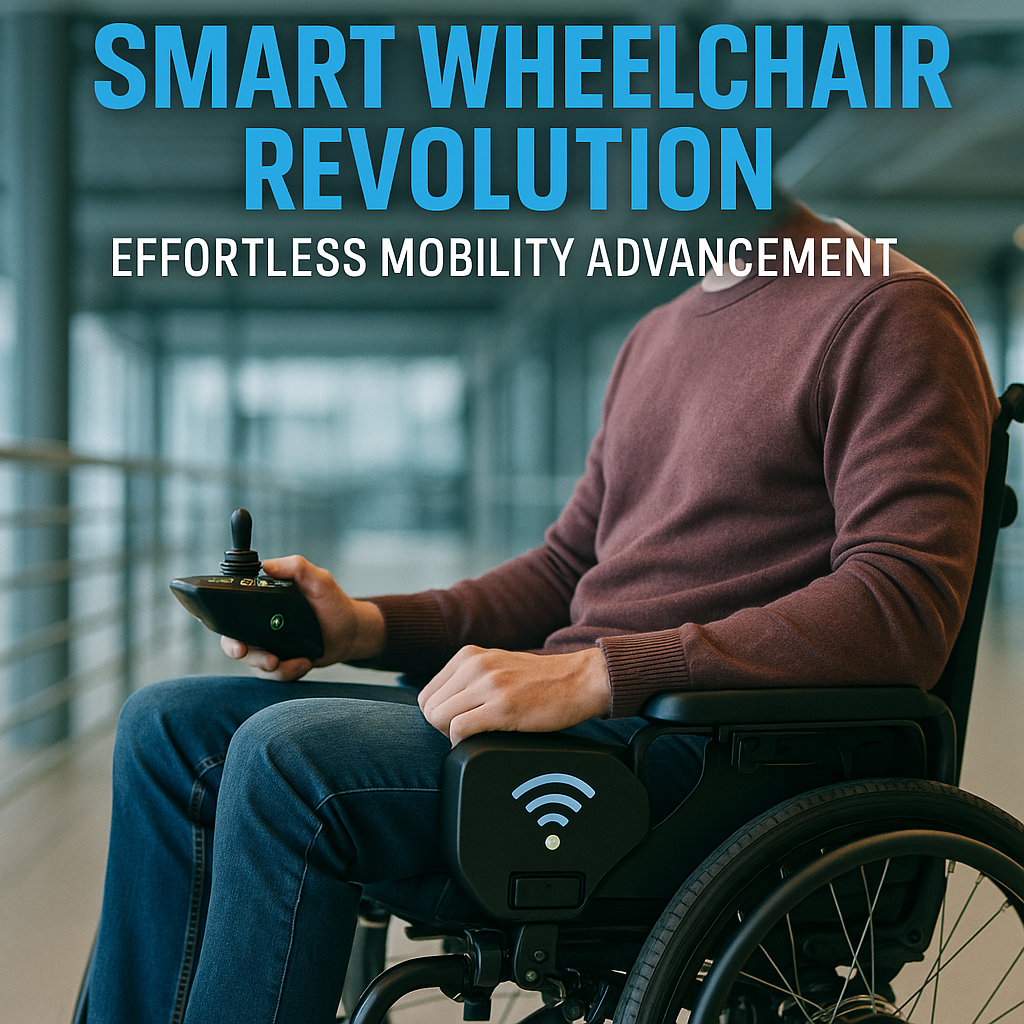
AI-Powered Smart Wheelchairs: Revolutionizing Mobility Assistance
Smart wheelchairs, powered by artificial intelligence and advanced sensors, are reshaping the landscape of mobility assistance. These innovative mobility aids leverage technologies like IoT connectivity and sensor fusion to create adaptive platforms that enhance user independence and safety. In this article, we delve into the core technologies behind smart wheelchairs, their key features, real-world applications, and best practices for implementation.
Core Technologies Behind Smart Wheelchairs
Smart wheelchairs incorporate cutting-edge technologies to provide advanced functionalities:
AI & Machine Learning:
Artificial intelligence algorithms power path planning and obstacle detection, enabling autonomous navigation in complex environments.
Sensor Suite:
Equipped with LiDAR, ultrasonic sensors, depth cameras, and Inertial Measurement Units (IMUs), smart wheelchairs gather real-time data for accurate decision-making.
Connectivity:
Built-in Bluetooth, Wi-Fi, and support for 5G connectivity facilitate remote monitoring, update installations, and seamless integration with other devices.
Power Management:
Efficient battery optimization techniques and regenerative braking systems maximize the wheelchair’s operational battery life.
Key Features & Functionalities
Smart wheelchairs offer a range of features that enhance user experience and safety:
- Autonomous Navigation & Obstacle Avoidance: Intelligent systems navigate obstacles and plan optimal routes.
- Voice and Gesture Control Interfaces: Users can interact with the wheelchair through voice commands or gestures for intuitive operation.
- Adaptive Seating & Pressure Ulcer Prevention: Dynamic seating adjustments reduce pressure points, enhancing comfort and preventing ulcers.
- Health Monitoring: Smart wheelchairs track posture, integrate vital signs monitoring, and provide real-time health data.
- Remote Diagnostics & Over-the-Air Updates: Healthcare providers can remotely diagnose issues and update wheelchair software without physical intervention.
User Scenarios & Case Studies
Smart wheelchairs find application across various scenarios:
Urban Commuting:
Navigating through crowded sidewalks and utilizing public transport with ease.
Indoor Environments:
Integration with smart home devices for seamless mobility within homes and buildings.
Healthcare Facilities:
Assisting in patient transfers, fall prevention strategies, and enhancing healthcare facility operations.
Rehabilitation Use:
Tracking patient progress and customizing mobility solutions for improved outcomes.
Selection and Deployment Guide
When choosing and deploying smart wheelchairs, consider the following factors:
- Assessing User Needs: Evaluate mobility levels, cognitive abilities, and environmental requirements.
- Comparing Vendors: Analyze AI accuracy, sensor quality, warranty offerings, and technical support.
- Integration Requirements: Ensure compatibility with existing infrastructure and provide adequate training for caregivers.
- Compliance & Safety Standards: Adhere to regulatory approvals, cybersecurity guidelines, and quality benchmarks.
Challenges & Future Outlook
Despite the advancements, smart wheelchairs face challenges:
- Technical Hurdles: Ensuring reliable Simultaneous Localization and Mapping (SLAM) in dynamic settings.
- Cost and Reimbursement: Addressing insurance coverage issues to ensure affordability for end-users.
- Ethical & Privacy Considerations: Define data ownership, privacy rights, and obtain user consent for data collection.
- Emerging Trends: Integration of augmented reality for navigation and exploring swarm robotics for group mobility solutions.
Visual Assets Suggestions
Consider including a diagram illustrating the sensor and computing architecture of a smart wheelchair to enhance understanding and visual appeal.
In conclusion, AI-powered smart wheelchairs represent a significant leap forward in mobility aid technology, offering enhanced functionality, safety, and independence to users. By understanding the core technologies, key features, deployment considerations, and future trends, healthcare importers, distributors, and elderly care buyers can make informed decisions to integrate smart wheelchairs into their offerings.
Tenrova Healthcare is at the forefront of delivering innovative healthcare solutions. Contact us today to explore our range of smart mobility solutions for improved care outcomes and user experience.AI-Powered Smart Wheelchairs: Revolutionizing Mobility Assistance
In today’s rapidly evolving technological landscape, the integration of artificial intelligence and IoT connectivity has paved the way for groundbreaking advancements in mobility solutions. One such innovation making waves in the healthcare industry is the emergence of AI-powered smart wheelchairs. These intelligent mobility aids are transforming traditional wheelchairs into adaptive platforms that offer enhanced independence and safety for users. Let’s delve into the core technologies, key features, real-world applications, and deployment considerations of these cutting-edge smart wheelchairs.
Core Technologies Behind Smart Wheelchairs
1. AI & Machine Learning
AI algorithms play a pivotal role in smart wheelchairs, enabling functions like path planning, obstacle detection, and navigation assistance. Machine learning capabilities enhance the wheelchair’s ability to adapt to varying environments and user preferences, ensuring a smoother and more personalized user experience.
2. Sensor Suite
Smart wheelchairs are equipped with a sophisticated array of sensors, including LiDAR, ultrasonic sensors, depth cameras, and IMUs. These sensors provide real-time data on the wheelchair’s surroundings, allowing for precise navigation, obstacle avoidance, and spatial awareness.
3. Connectivity
Seamless connectivity through Bluetooth, Wi-Fi, and emerging technologies like 5G facilitates remote monitoring, real-time data transmission, and cloud integration. This connectivity ensures that users can stay connected and caregivers can monitor wheelchair status and performance efficiently.
4. Power Management
Efficient power management systems optimize battery usage and incorporate regenerative braking technology to enhance energy efficiency. These features extend the wheelchair’s battery life and reduce the need for frequent recharging, enhancing user convenience and mobility.
Key Features & Functionalities
- Autonomous Navigation & Obstacle Avoidance: Smart wheelchairs can autonomously navigate complex environments, detect obstacles, and choose optimal paths to ensure user safety and efficiency.
- Voice and Gesture Control Interfaces: Intuitive interfaces allow users to control the wheelchair through voice commands or gestures, enhancing accessibility for individuals with limited motor skills.
- Adaptive Seating & Pressure Ulcer Prevention: Smart wheelchairs feature adaptive seating systems that adjust to user comfort and prevent pressure ulcers through continuous monitoring and adjustments.
- Health Monitoring: Advanced sensors track user posture, integrate vital signs monitoring, and provide real-time health data to users and caregivers, enhancing overall well-being.
- Remote Diagnostics & Over-the-Air Updates: Remote diagnostic capabilities enable proactive maintenance and software updates, ensuring optimal performance and functionality.
User Scenarios & Case Studies
Smart wheelchairs offer versatile applications across various settings:
- Urban Commuting: Navigating crowded sidewalks and public transport.
- Indoor Environments: Seamless integration with smart home features like automated doors and elevators.
- Healthcare Facilities: Facilitating patient transfers and fall prevention measures.
- Rehabilitation Use: Data-driven tracking of progress and mobility improvements.
Selection and Deployment Guide
Implementing smart wheelchairs involves careful consideration of user needs, vendor comparisons, integration requirements, and compliance standards:
- Assessing User Needs: Evaluate mobility levels, cognitive abilities, and environmental factors.
- Comparing Vendors: Assess AI accuracy, sensor quality, warranty, and support services.
- Integration Requirements: Consider infrastructure compatibility and caregiver training needs.
- Compliance & Safety Standards: Ensure adherence to ISO, FDA approvals, and cybersecurity protocols.
Challenges & Future Outlook
Addressing technical hurdles, cost considerations, ethical issues, and emerging trends such as AR-assisted navigation and swarm robotics will shape the future of smart wheelchairs.
Visual Assets Suggestions
Consider incorporating a diagram illustrating the sensor and computing architecture of smart wheelchairs to provide a visual representation of their advanced technology.
In conclusion, AI-powered smart wheelchairs represent a paradigm shift in mobility assistance, offering unprecedented levels of independence, safety, and efficiency to users. By leveraging cutting-edge technologies and innovative features, these intelligent mobility aids are revolutionizing the way individuals with mobility challenges navigate the world around them.
For healthcare importers, distributors, and elderly care buyers seeking advanced mobility solutions, exploring the possibilities offered by AI-powered smart wheelchairs can lead to transformative outcomes in both user experience and quality of care.
Call to Action: To learn more about incorporating AI-powered smart wheelchairs into your healthcare facility or product offerings, contact Tenrova Healthcare today for personalized consultation and solutions tailored to your needs.AI-Powered Smart Wheelchairs: Revolutionizing Mobility Assistance
The landscape of mobility assistance is undergoing a significant transformation with the emergence of AI-powered smart wheelchairs. These intelligent wheelchairs, equipped with cutting-edge technologies such as artificial intelligence, IoT connectivity, and advanced sensor fusion, are revolutionizing traditional wheelchairs into smart, adaptive mobility platforms. In this article, we will delve into the core technologies behind smart wheelchairs, their key features and functionalities, real-world user scenarios, selection and deployment guide, challenges, and future outlook in the realm of AI mobility aids.
Core Technologies Behind Smart Wheelchairs
AI & Machine Learning: Smart wheelchairs leverage AI algorithms for path planning, obstacle detection, and decision-making processes.
Sensor Suite: Utilizing a variety of sensors including LiDAR, ultrasonic sensors, depth cameras, and IMUs, smart wheelchairs can perceive their surroundings accurately and navigate complex environments.
Connectivity: Seamless connectivity through Bluetooth, Wi-Fi, and 5G enables remote monitoring, data sharing, and real-time communication with caregivers or healthcare providers.
Power Management: Sophisticated battery optimization techniques and regenerative braking systems ensure efficient power utilization and prolonged battery life.
Key Features & Functionalities
- Autonomous Navigation & Obstacle Avoidance: Smart wheelchairs can autonomously navigate through indoor and outdoor environments while detecting and avoiding obstacles in their path.
- Voice and Gesture Control Interfaces: Users can control the wheelchair by voice commands or gestures, enhancing ease of use and accessibility.
- Adaptive Seating & Pressure Ulcer Prevention: Smart wheelchairs incorporate adaptive seating systems that adjust to the user’s posture and movements, reducing the risk of pressure ulcers.
- Health Monitoring: These wheelchairs monitor users’ posture, vital signs, and health indicators, providing valuable insights for personalized care.
- Remote Diagnostics & Over-the-Air Updates: Healthcare providers can remotely diagnose issues, perform software updates, and optimize wheelchair settings without the need for in-person visits.
User Scenarios & Case Studies
- Urban Commuting: Smart wheelchairs facilitate navigating crowded sidewalks and public transport, enhancing independence for users in urban settings.
- Indoor Environments: Integration with home automation systems enables seamless interaction with smart devices like doors and elevators.
- Healthcare Facilities: In healthcare settings, smart wheelchairs assist in patient transfers, fall prevention, and enhancing overall safety.
- Rehabilitation Use: These wheelchairs track user progress using data-driven insights, aiding in personalized rehabilitation plans.
Selection and Deployment Guide
- Assessing User Needs: Evaluate mobility levels, cognitive abilities, and environmental factors to select the most suitable smart wheelchair.
- Comparing Vendors: Consider AI accuracy, sensor quality, warranty, and customer support when choosing a wheelchair provider.
- Integration Requirements: Ensure compatibility with existing infrastructure and provide adequate training for caregivers.
- Compliance & Safety Standards: Verify ISO certifications, FDA approvals, and cybersecurity measures for data protection.
Challenges & Future Outlook
- Technical Hurdles: Overcoming challenges related to reliable SLAM in dynamic environments remains a key focus for smart wheelchair developers.
- Cost and Reimbursement: Addressing cost barriers and exploring insurance coverage models are essential for widespread adoption.
- Ethical & Privacy Considerations: Upholding data ownership, user consent, and privacy rights are critical in the deployment of smart wheelchairs.
- Emerging Trends: Anticipated trends include AR-assisted navigation and the use of swarm robotics for group mobility solutions.
Visual Assets Suggestions
To further enhance understanding, a diagram showcasing a smart wheelchair’s sensor and computing architecture can provide valuable insights into the technical intricacies of these innovative mobility aids.
In conclusion, AI-powered smart wheelchairs represent a significant advancement in mobility assistance, offering enhanced functionalities, improved independence, and personalized care for users. By understanding the core technologies, features, user scenarios, challenges, and future trends of smart wheelchairs, healthcare importers, distributors, and elderly care buyers can make informed decisions when considering the adoption of these innovative solutions.
For more information on how smart wheelchairs can revolutionize your healthcare facilities or improve the quality of care for your patients, contact Tenrova Healthcare today.
[CTA: Contact Tenrova Healthcare for a personalized consultation on integrating AI-powered smart wheelchairs into your healthcare facility.]Smart Wheelchairs: Transforming Mobility with AI Innovation
The landscape of mobility assistance is undergoing a groundbreaking transformation with the advent of AI-powered smart wheelchairs. These intelligent mobility aids harness the power of artificial intelligence, IoT connectivity, and advanced sensor fusion to revolutionize traditional wheelchairs into smart, adaptive platforms. In this article, we delve into the core technologies, key features, real-world applications, and deployment best practices of these cutting-edge AI mobility aids.
Core Technologies Behind Smart Wheelchairs
AI & Machine Learning: Enhancing Path Planning and Obstacle Detection
AI algorithms enable smart wheelchairs to autonomously navigate complex environments by analyzing data from sensors and adapting their paths in real-time to avoid obstacles.
Sensor Suite: LiDAR, Ultrasonic, Depth Cameras, IMUs
Advanced sensor fusion using LiDAR, ultrasonic sensors, depth cameras, and Inertial Measurement Units (IMUs) provides these wheelchairs with precise environmental awareness, enabling obstacle avoidance and smooth navigation.
Connectivity: Enabling Remote Monitoring with Bluetooth, Wi-Fi, and 5G
IoT connectivity through Bluetooth, Wi-Fi, and emerging 5G technology allows for seamless data exchange, remote monitoring, and control of smart wheelchairs for enhanced user safety and management.
Power Management: Optimizing Battery Usage and Regenerative Braking
Efficient power management systems optimize battery usage and incorporate regenerative braking technology to extend the range and operational efficiency of smart wheelchairs.
Key Features & Functionalities
Autonomous Navigation & Obstacle Avoidance: Smart wheelchairs can autonomously navigate complex environments and dynamically avoid obstacles in real-time.
Voice and Gesture Control Interfaces: Intuitive voice and gesture controls provide users with a more natural and interactive way to operate the wheelchair.
Adaptive Seating & Pressure Ulcer Prevention: Adaptive seating systems adjust to user needs, preventing pressure ulcers and ensuring comfort during extended use.
Health Monitoring: Advanced health monitoring features track user postures, integrate vitals, and provide insights for better health management.
Remote Diagnostics & Over-the-Air Updates: Remote diagnostics enable real-time troubleshooting, while over-the-air updates ensure the wheelchair is always equipped with the latest features and improvements.
User Scenarios & Case Studies
Urban Commuting:
Smart wheelchairs excel in navigating crowded sidewalks and public transport, providing users with enhanced mobility and independence in urban settings.
Indoor Environments:
Integration with home automation systems allows smart wheelchairs to interact with smart doors, elevators, and other devices, enhancing user convenience within indoor spaces.
Healthcare Facilities:
In healthcare settings, smart wheelchairs assist in patient transfers, fall prevention, and enhance overall care delivery for medical professionals.
Rehabilitation Use:
Data-driven progress tracking capabilities enable therapists to monitor and assess user rehabilitation progress more effectively.
Selection and Deployment Guide
Assessing User Needs: Consider mobility levels, cognitive abilities, and environmental factors when selecting a smart wheelchair.
Comparing Vendors: Evaluate AI accuracy, sensor quality, warranty, and support services before choosing a smart wheelchair supplier.
Integration Requirements: Ensure compatibility with facility infrastructure and provide adequate caregiver training for successful deployment.
Compliance & Safety Standards: Adhere to ISO, FDA approvals, cybersecurity protocols, and ensure user privacy compliance.
Challenges & Future Outlook
Despite the remarkable advancements in smart wheelchair technology, challenges such as reliable Simultaneous Localization and Mapping (SLAM) in dynamic environments, cost considerations, ethical implications, and emerging trends like Augmented Reality (AR) navigation and swarm robotics present opportunities for further innovation.
Visual Assets Suggestions
A detailed diagram illustrating the sensor and computing architecture of a smart wheelchair can aid in understanding the complex technology powering these innovative mobility solutions.
As healthcare importers, distributors, and elderly care buyers, embracing AI-powered smart wheelchairs can enhance the quality of care and independence for individuals with mobility limitations. Stay ahead of the curve by exploring the possibilities these cutting-edge mobility aids offer for transforming the healthcare landscape.
Conclusion
Smart wheelchairs represent the pinnacle of AI-driven innovation in mobility assistance, offering unparalleled convenience, safety, and independence for users. By understanding the core technologies, key features, deployment strategies, and future trends of smart wheelchairs, healthcare professionals can make informed decisions to revolutionize mobility care. Embrace the future of mobility with AI-powered smart wheelchairs from Tenrova Healthcare.
CTA: Explore Tenrova’s range of state-of-the-art smart wheelchairs today and revolutionize mobility assistance for your clients. Contact us for a demo and consultation.Title: Reinventing Mobility Assistance with AI-Powered Smart Wheelchairs
Introduction
Artificial intelligence has revolutionized many industries, and now it’s transforming mobility assistance as well. The emergence of AI-powered smart wheelchairs is changing the game for users seeking greater independence and safety. By leveraging advanced technologies like IoT connectivity and sensor fusion, these intelligent wheelchairs are reshaping the landscape of traditional mobility aids.
Core Technologies Behind Smart Wheelchairs
AI & Machine Learning: These technologies enable path planning and obstacle detection, making navigation smoother and safer for users.
Sensor Suite: Incorporating LiDAR, ultrasonic sensors, depth cameras, and IMUs enhances the wheelchair’s ability to perceive its surroundings and make informed decisions.
Connectivity: Bluetooth, Wi-Fi, and 5G connectivity facilitate remote monitoring, data transmission, and seamless integration with smart devices.
Power Management: Optimizing battery usage and incorporating regenerative braking systems ensure longer operational time and eco-friendly functionality.
Key Features & Functionalities
Autonomous Navigation & Obstacle Avoidance: Smart wheelchairs can autonomously navigate through environments and avoid obstacles, enhancing user safety.
Voice and Gesture Control Interfaces: Users can interact with their wheelchair through intuitive voice and gesture commands, improving accessibility and ease of use.
Adaptive Seating & Pressure Ulcer Prevention: These features ensure user comfort and reduce the risk of pressure ulcers, promoting overall well-being.
Health Monitoring: The wheelchair can track posture, integrate vital signs, and provide real-time health data to users and caregivers.
Remote Diagnostics & Over-the-Air Updates: These capabilities enable remote troubleshooting and software updates, ensuring the wheelchair remains updated and efficient.
User Scenarios & Case Studies
Urban Commuting: Smart wheelchairs excel in navigating crowded sidewalks and public transport systems, providing users with enhanced mobility in urban settings.
Indoor Environments: Integration with home automation systems allows for seamless maneuvering through smart doors and elevators, improving indoor mobility.
Healthcare Facilities: From patient transfers to fall prevention, smart wheelchairs offer invaluable assistance in healthcare settings, enhancing patient care and safety.
Rehabilitation Use: Tracking user progress through data-driven insights, smart wheelchairs are invaluable tools in rehabilitation centers, aiding in recovery.
Selection and Deployment Guide
Assessing User Needs: Consider mobility levels, cognitive abilities, and environmental factors to select the most suitable smart wheelchair.
Comparing Vendors: Evaluate AI accuracy, sensor quality, and support services offered by different vendors before making a purchase.
Integration Requirements: Ensure compatibility with existing infrastructure and provide adequate training to caregivers for seamless integration.
Compliance & Safety Standards: Prioritize smart wheelchairs that meet ISO, FDA approvals, and cybersecurity standards to ensure user safety and data security.
Challenges & Future Outlook
Technical Hurdles: Overcoming challenges in reliable SLAM technology in dynamic environments is crucial for the widespread adoption of smart wheelchairs.
Cost and Reimbursement: Addressing insurance coverage models and reimbursement policies is essential in making smart wheelchairs more accessible to users.
Ethical & Privacy Considerations: Protecting user data ownership and ensuring user consent are vital considerations in the development and deployment of smart wheelchairs.
Emerging Trends: Anticipated trends like AR-assisted navigation and swarm robotics for group mobility signal exciting developments in the field of smart wheelchairs.
In conclusion, AI-powered smart wheelchairs are transforming the landscape of mobility assistance, offering users unprecedented independence and safety. As healthcare importers, distributors, and elderly care buyers, embracing these innovative technologies can revolutionize the way we provide care and support to individuals with mobility challenges.
CTA: Explore the possibilities of AI-powered smart wheelchairs and revolutionize mobility assistance for your clients today!# AI-Powered Smart Wheelchairs: Revolutionizing Mobility Assistance
The advancement of artificial intelligence (AI) and Internet of Things (IoT) connectivity has paved the way for a new era in mobility assistance with the development of smart wheelchairs. These intelligent wheelchairs leverage advanced sensor fusion technology to offer adaptive and personalized mobility solutions for users with diverse needs. In this article, we delve into the core technologies, key features, real-world applications, and implementation best practices of AI-powered smart wheelchairs.
Core Technologies Behind Smart Wheelchairs
AI & Machine Learning: Path Planning and Obstacle Detection
One of the defining features of smart wheelchairs is their ability to autonomously navigate through environments by utilizing AI algorithms for path planning and obstacle detection. Machine learning algorithms enable these wheelchairs to adapt to varying terrains and avoid collisions with objects in real-time.
Sensor Suite: LiDAR, Ultrasonic, Depth Cameras, IMUs
Smart wheelchairs are equipped with a sophisticated sensor suite that includes LiDAR, ultrasonic sensors, depth cameras, and inertial measurement units (IMUs). These sensors provide the wheelchair with a 360-degree view of its surroundings, enabling precise navigation and obstacle avoidance capabilities.
Connectivity: Bluetooth, Wi-Fi, 5G for Remote Monitoring
IoT connectivity is a crucial aspect of smart wheelchairs, allowing seamless integration with other smart devices and enabling remote monitoring and control. Bluetooth, Wi-Fi, and 5G connectivity ensure constant communication between the wheelchair and caregivers or healthcare providers.
Power Management: Battery Optimization, Regenerative Braking
Efficient power management is essential for the prolonged operation of smart wheelchairs. These devices optimize battery usage and can even harness energy through regenerative braking systems, enhancing the overall energy efficiency of the wheelchair.
Key Features & Functionalities
Smart wheelchairs offer a range of innovative features and functionalities that enhance user experience and safety:
- Autonomous Navigation & Obstacle Avoidance: The ability to navigate complex environments independently and avoid obstacles in real-time.
- Voice and Gesture Control Interfaces: Intuitive control mechanisms that enable users to operate the wheelchair with voice commands or gestures.
- Adaptive Seating & Pressure Ulcer Prevention: Customizable seating options and pressure redistribution systems to prevent skin breakdown.
- Health Monitoring: Integration with vital sign monitoring devices to track user posture and health metrics.
- Remote Diagnostics & Over-the-Air Updates: Remote troubleshooting capabilities and seamless software updates for optimal performance.
User Scenarios & Case Studies
Smart wheelchairs have diverse applications across various settings:
- Urban Commuting: Navigating crowded sidewalks and public transportation systems with ease.
- Indoor Environments: Seamless integration with smart home devices for enhanced accessibility.
- Healthcare Facilities: Safely transferring patients and preventing falls in clinical settings.
- Rehabilitation Use: Monitoring and tracking progress in rehabilitation programs.
Selection and Deployment Guide
When choosing a smart wheelchair for your facility or organization, consider the following factors:
- Assessing User Needs: Understanding the mobility level and cognitive abilities of users.
- Comparing Vendors: Evaluating AI accuracy, sensor quality, and after-sales support.
- Integration Requirements: Ensuring compatibility with existing infrastructure and training caregivers.
- Compliance & Safety Standards: Confirming regulatory approvals and cybersecurity measures.
Challenges & Future Outlook
While smart wheelchairs offer promising benefits, there are challenges to address:
- Technical Hurdles: Enhancing Simultaneous Localization and Mapping (SLAM) in dynamic environments.
- Cost and Reimbursement: Ensuring insurance coverage and reimbursement models for these advanced devices.
- Ethical & Privacy Considerations: Addressing data ownership and user privacy concerns.
- Emerging Trends: Exploring augmented reality navigation and swarm robotics for group mobility solutions.
Visual Assets Suggestions
Consider including a diagram illustrating the sensor and computing architecture of a smart wheelchair to enhance understanding and visual appeal.
In conclusion, AI-powered smart wheelchairs represent a significant advancement in mobility assistance, offering enhanced independence and safety for users. By understanding the core technologies, key features, and real-world applications of these innovative devices, healthcare importers, distributors, and elderly care buyers can make informed decisions to improve the quality of care and support for individuals with mobility challenges.
For more information on integrating smart wheelchairs into your healthcare facility or organization, reach out to Tenrova Healthcare for personalized guidance and solutions.
Call to Action (CTA): Contact Tenrova Healthcare today to explore how AI-powered smart wheelchairs can elevate the standard of care for individuals with mobility challenges.