
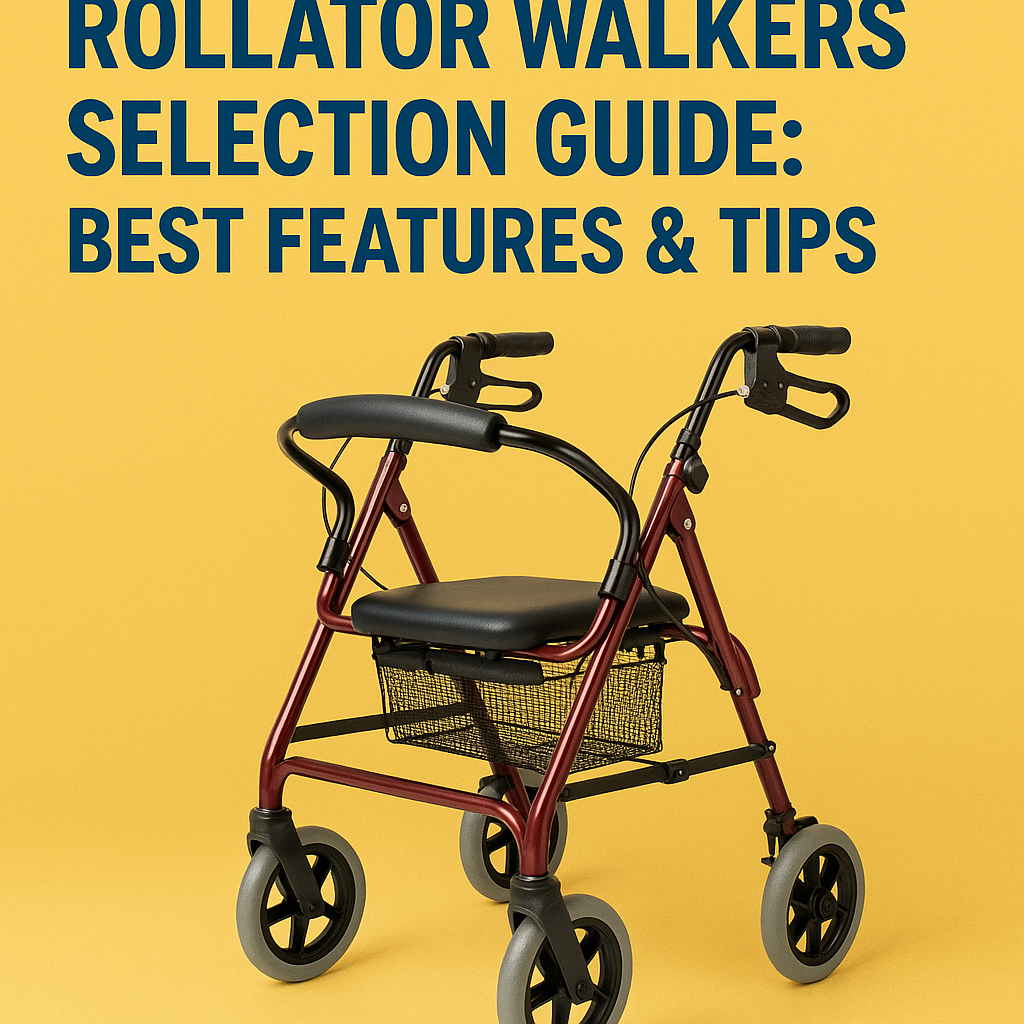
Introducing the World of Rollator Walkers
With advancements in healthcare technology and a growing focus on ensuring the well-being of seniors and individuals with limited mobility, rollator walkers have become essential aids in enhancing independence and safety. For healthcare importers, distributors, and elderly care buyers, understanding the types, key features, and selection tips for rollator walkers is crucial in providing the most suitable mobility solutions. Let’s delve into the ultimate guide to rollator walkers offered by Tenrova Healthcare.
Types of Rollator Walkers
Upright Aluminium Walkers: Designed for maximum stability with four non-rolling legs, lightweight aluminium frames, ergonomic handles, and convenient one-click folding for compact storage.
Roller Walkers with Wheels: Equipped with front wheels for smooth navigation indoors and outdoors, hand-operated brakes for controlled stopping, adjustable height, and quick-fold mechanism for convenience.
Rollators with Seat & Storage: Featuring built-in seats for rest breaks, removable under-seat storage bags, and optional dual armrests to assist in standing and sitting comfortably.
Heavy-Duty Steel Rollators: Ideal for high load capacity of up to 136 kg, durable powder-coated steel frames, and large PVC-coated wheels for stability on uneven surfaces.
Outdoor & Multi-Functional Rollators: Perfect for outdoor use with features like shopping bags or baskets, swivel backrests, brake locks for resting safety, and fold-flat designs for easy transport.
Key Features to Evaluate
- Frame Material & Weight: Choose between aluminium alloy for lightness or steel frames for extra durability.
- Wheel Size & Type: Opt for 5″–8″ wheels for versatility and considering PVC, PU, or rubber tire types.
- Braking System: Look for loop or lever brakes with parking brake locks for secure resting.
- Seat & Back Support: Decide between PU padded seats or Textilene for comfort, and swivel or fixed backrests.
- Storage & Accessories: Consider detachable bags, baskets, trays, cup holders, cane holders, and trays.
- Adjustability & Ergonomics: Prioritize height-adjustable handles, ergonomic grips, and upright posture design.
- Folding & Portability: Opt for one-hand quick-fold or one-pull folding mechanisms for easy storage and transit.
Matching Rollators to Care Settings
- Homecare & Assisted Living: Consider lightweight aluminium models with storage bags or four-leg upright walkers.
- Rehabilitation & Post-Surgery: Choose rollators with seats, brakes, and adjustable armrests for safe transfers.
- Hospitals & Nursing Homes: Opt for heavy-duty steel models or multi-functional rollators with shopping/basket options.
- Outdoor & Community Use: Select large-wheel rollators with suspension and accessories like backrests and cargo baskets.
Maintenance & Safety Checks
Regular maintenance and safety checks are vital to ensure the optimal performance and longevity of rollator walkers. Conduct weekly inspections, monthly cleaning, and follow replacement guidelines to keep the equipment in top condition.
Compliance & Certifications
Verify CE, FDA, and ISO13485 approvals for medical-grade quality, request third-party test reports and factory inspection certificates, and ensure products meet local regulatory requirements and user standards.
Conclusion & Next Steps
Choosing the right rollator walker is essential for enhancing mobility, comfort, and safety. Tenrova Healthcare offers a wide range of CE- and ISO-certified rollator walkers to cater to individual needs. Explore the Rollator Walker Collection or contact Tenrova for personalized recommendations, bulk pricing, and complimentary sample trials.
Empower your clients with reliable mobility solutions—because independence and confidence matter.
Contact Tenrova Today:
- Email: hysun0516@gmail.com
- WhatsApp/Phone: +86-138-1239-0890
- Website: Tenrova HealthcareIn the competitive landscape of healthcare mobility products, choosing the right rollator walker is paramount for ensuring comfort, safety, and enhanced mobility for seniors and individuals with limited mobility. As a trusted provider in the industry, Tenrova Healthcare offers a comprehensive range of rollator walkers designed to meet the diverse needs of healthcare importers, distributors, and elderly care buyers.
##The Different Types of Rollator Walkers
###Upright Aluminium Walkers
Upright aluminium walkers, such as the FW913L model, feature four non-rolling legs for maximum stability. With a lightweight frame and ergonomic handles, these walkers offer ease of use and one-click folding design for compact storage.
###Roller Walkers with Wheels
Roller walkers with wheels, like the FWTW913L model, are equipped with front wheels for smooth indoor and outdoor navigation, hand-operated brakes for controlled stopping, adjustable height, and quick-fold mechanisms, providing versatility and convenience.
###Rollators with Seat & Storage
Models like the FW7103 and FWTW7204 come with built-in PU or Textilene seats for rest breaks, removable under-seat storage bags for personal items, and optional dual armrests to assist with standing and sitting, enhancing comfort and functionality.
###Heavy-Duty Steel Rollators
For users requiring a higher load capacity, the RL3513 model offers a durable powder-coated steel frame, large 8″ PVC-coated wheels for uneven surfaces, and robust construction that can support up to 136 kg (300 lbs) in weight.
###Outdoor & Multi-Functional Rollators
Featuring a fold-flat design for easy transport, models like the RL3508 are ideal for outdoor and community use, with added features such as shopping bags or baskets for errands, swivel backrests, and brake locks for safe resting on varied terrains.
##Key Features to Look For
When evaluating rollator walkers, consider key features such as frame material, wheel size and type, braking system, seat and back support, storage options, adjustability and ergonomics, as well as folding and portability mechanisms to ensure optimal usability and user comfort.
##Matching Rollators to Care Settings
Selecting the right rollator walker for different care settings is crucial. Whether for homecare, assisted living, rehabilitation, post-surgery, hospitals, nursing homes, or outdoor use, Tenrova Healthcare offers a diverse range of models tailored to specific needs, from lightweight and compact designs to heavy-duty and multi-functional options.
##Maintenance and Safety Checks
Regular maintenance and safety checks are essential to ensure the longevity and optimal performance of rollator walkers. Conduct weekly inspections, monthly cleaning routines, and adhere to replacement guidelines to keep the equipment in top condition and safe for users.
##Compliance and Certifications
Tenrova Healthcare products comply with industry standards and certifications, including CE, FDA, and ISO13485 approvals for medical-grade quality. Third-party test reports, factory inspection certificates, and adherence to local regulatory requirements further testify to the brand’s commitment to quality and safety.
In conclusion, selecting the right rollator walker can vastly improve mobility, comfort, and safety for users. At Tenrova Healthcare, our diverse range of rollator walkers caters to the specific needs of healthcare importers, distributors, and elderly care buyers. Explore our Rollator Walker Collection today or contact us for personalized recommendations, bulk pricing, and complimentary sample trials.
Contact Tenrova Today
Email: hysun0516@gmail.com
WhatsApp/Phone: +86-138-1239-0890
Website: Tenrova Healthcare
Empower your clients with reliable mobility solutions – because independence and confidence matter.Guide to Choosing the Perfect Rollator Walker for Elderly Care
When it comes to supporting mobility and independence for seniors and individuals with limited mobility, selecting the right rollator walker is crucial. With various types and key features to consider, it can be overwhelming to navigate the options. In this comprehensive guide, we will explore the different types of rollator walkers available in the market, highlight essential features to evaluate, and provide insights to help healthcare importers, distributors, and elderly care buyers make informed decisions.
Types of Rollator Walkers
Upright Aluminium Walkers: These models, such as the FW913L, offer four non-rolling legs for maximum stability, a lightweight frame, ergonomic handles, and a one-click folding design for easy storage.
Roller Walkers with Wheels: Featuring front wheels for smooth indoor and outdoor navigation, hand-operated brakes, adjustable height, and a quick-fold mechanism, models like the FWTW913L provide enhanced maneuverability and safety.
Rollators with Seat & Storage: Rollators like the FW7103 and FWTW7204 come with a built-in seat for rest breaks, removable under-seat storage bags, and optional dual armrests to assist with standing and sitting.
Heavy-Duty Steel Rollators: Designed for durability and high load capacity, models like the RL3513 feature a powder-coated steel frame and large PVC-coated wheels, making them ideal for uneven surfaces.
Outdoor & Multi-Functional Rollators: Models like the RL3508 offer features such as a shopping bag or basket for errands, a swivel backrest, brake lock for safe resting, and a fold-flat design for easy transportation.
Key Features to Evaluate
- Frame Material & Weight: Consider aluminum alloy for lightweight and corrosion resistance, while steel frames provide added durability in institutional settings.
- Wheel Size & Type: Opt for 5″–8″ front wheels for versatility, and choose between PVC, PU, or rubber tires for shock absorption and traction.
- Braking System: Look for loop or lever brakes for easy grip, along with parking brake locks to secure the rollator during rest.
- Seat & Back Support: Decide between PU padded seats for comfort or breathable Textilene material, and choose swivel or fixed backrests based on user preference.
- Storage & Accessories: Select rollators with detachable bags, baskets, or trays for personal items, as well as cup holders and cane holders for added convenience.
- Adjustability & Ergonomics: Prioritize height-adjustable handles, ergonomic grips, and upright posture designs to reduce strain during use.
- Folding & Portability: Opt for rollators with one-hand quick-fold or one-pull folding mechanisms and compact dimensions for easy travel and storage.
Matching Rollators to Care Settings
- Homecare & Assisted Living: Lightweight aluminum models like the FW7103 are ideal, with storage bags for convenience.
- Rehabilitation & Post-Surgery: Rollators with seats, brakes, and adjustable armrests like the FWTW7204 provide safety and support during recovery.
- Hospitals & Nursing Homes: Heavy-duty steel rollators such as the RL3513 offer high load capacity, while multi-functional models suit various needs.
- Outdoor & Community Use: Rollators designed for outdoor use, like the RL3508, with large wheels and accessories for uneven terrain, are preferable.
Maintenance & Safety Checks
Regular maintenance is essential to ensure the longevity and safety of rollator walkers. Conduct weekly inspections, monthly cleaning, and adhere to replacement guidelines to prevent accidents and ensure user safety.
Compliance & Certifications
When selecting rollator walkers, always verify CE, FDA, and ISO13485 approvals for medical-grade quality. Request third-party test reports and factory inspection certificates to ensure compliance with local regulatory requirements and user standards.
Conclusion & Next Steps
Selecting the right rollator walker is crucial in enhancing mobility, comfort, and safety for individuals with limited mobility. At Tenrova Healthcare, we offer a range of CE- and ISO-certified rollator walkers tailored to various needs—from lightweight upright walkers to heavy-duty outdoor models. Explore our Rollator Walker Collection today and empower your clients with reliable mobility solutions.
For personalized recommendations, bulk pricing, and complimentary sample trials, contact Tenrova Healthcare today.
Contact Tenrova Today
- Email: hysun0516@gmail.com
- WhatsApp/Phone: +86-138-1239-0890
- Website: tenrova.com
Empower your clients with reliable mobility solutions because independence and confidence matter.Empower Your Clients with Tenrova Healthcare’s Superior Rollator Walkers
Rollator walkers are indispensable mobility aids that provide crucial support and stability for seniors, rehabilitation patients, and individuals with limited mobility. Selecting the right rollator can significantly enhance user comfort, reduce the risk of falls, and streamline daily activities. In this comprehensive guide, we delve into the diverse types of rollator walkers available, highlight key features to consider, and offer expert tips to help you choose the perfect model for your specific care environment.
Types of Rollator Walkers
Upright Aluminium Walkers
- Design: Four non-rolling legs for maximum stability, lightweight frame, ergonomic handles
- Features: One-click folding mechanism for compact storage
- Example Model: FW913L
Roller Walkers with Wheels
- Design: Front wheels for smooth indoor/outdoor navigation, hand-operated brakes, adjustable height
- Features: Quick-fold mechanism for convenience
- Example Model: FWTW913L
Rollators with Seat & Storage
- Design: Built-in seat for rest breaks, under-seat storage bag for personal items
- Features: Optional dual armrests for standing and sitting assistance
- Example Models: FW7103, FWTW7204
Heavy-Duty Steel Rollators
- Design: High load capacity up to 136 kg, durable powder-coated steel frame
- Features: Large 8″ PVC-coated wheels for uneven surfaces
- Example Model: RL3513
Outdoor & Multi-Functional Rollators
- Design: Integrated shopping bag or basket, swivel backrest for safe resting
- Features: Fold-flat design for easy transport
- Example Model: RL3508
Key Features to Evaluate
When selecting a rollator walker, key features to consider include:
- Frame Material & Weight: Choose between lightweight aluminium for personal use and sturdy steel for institutional settings.
- Wheel Size & Type: Opt for 5″-8″ front wheels with PVC, PU, or rubber tires for optimal traction.
- Braking System: Prioritize loop or lever brakes with parking brake locks for added safety.
- Seat & Back Support: Consider PU padded seats for comfort and swivel or fixed backrests based on user preference.
- Storage & Accessories: Look for detachable bags, cup holders, and trays for added convenience.
- Adjustability & Ergonomics: Opt for height-adjustable handles and ergonomic grips to reduce strain.
- Folding & Portability: Choose a model with one-hand quick-fold or pull mechanisms for ease of transportation.
Matching Rollators to Care Settings
Different care environments require tailored rollator solutions:
- Homecare & Assisted Living: Lightweight aluminium models like FW7103 with storage bags are ideal for indoor stability.
- Rehabilitation & Post-Surgery: Rollators with seats, brakes, and adjustable armrests, such as FWTW7204, support safe transfers.
- Hospitals & Nursing Homes: Heavy-duty steel rollators like RL3513 offer high load capacity, while multi-functional models with shopping baskets are versatile.
- Outdoor & Community Use: Opt for large-wheel rollators with suspension like RL3508 for uneven terrains, along with backrests and cargo baskets for added convenience.
Maintenance & Safety Checks
Regular maintenance is crucial for ensuring the longevity and safety of your rollator walker:
- Weekly Inspection: Test wheel rotation, brake functionality, and handle grips.
- Monthly Cleaning: Wipe down the frame, seat, and storage components with a mild disinfectant and check for any signs of wear or damage.
- Replacement Guidelines: Keep spare parts such as rubber tips, brake pads, and handle grips on hand and promptly replace any damaged components.
Compliance & Certifications
When selecting rollator walkers, ensure they meet the necessary quality and safety standards:
- CE, FDA, and ISO Certifications: Verify the necessary approvals for medical-grade quality.
- Third-Party Test Reports: Request test reports and factory inspection certificates for added assurance.
- Local Regulatory Requirements: Ensure the products comply with local regulations and user standards.
In conclusion, selecting the right rollator walker is paramount in enhancing mobility, comfort, and safety for users. At Tenrova Healthcare, our range of CE- and ISO-certified rollator walkers caters to a wide range of needs, from lightweight models to heavy-duty outdoor options. Explore our Rollator Walker Collection today or contact us for personalized recommendations, bulk pricing, and complimentary sample trials.
For reliable mobility solutions that prioritize independence and confidence, choose Tenrova Healthcare.
Contact Tenrova Today
- Email: hysun0516@gmail.com
- WhatsApp/Phone: +86-138-1239-0890
- Website: Tenrova HealthcareRollator walkers have become an essential mobility aid for seniors, rehabilitation patients, and individuals with limited mobility, providing support, stability, and independence. Selecting the right rollator walker is crucial to enhance mobility, comfort, and safety. In this comprehensive guide, we delve into the different types of rollator walkers, key features to consider, tips for selecting the ideal model, and match suitable rollators to various care settings.
Types of Rollator Walkers
When it comes to rollator walkers, there are several types to choose from, each offering unique features and benefits:
Upright Aluminium Walkers
- Features:
- Four non-rolling legs for maximum stability
- Lightweight frame and ergonomic handles
- One-click folding design for compact storage
Roller Walkers with Wheels
- Features:
- Front wheels for smooth indoor/outdoor navigation
- Hand-operated brakes for controlled stopping
- Adjustable height and quick-fold mechanism
Rollators with Seat & Storage
- Features:
- Built-in seat for rest breaks
- Removable storage bag for personal items
- Dual armrests for additional support
Heavy-Duty Steel Rollators
- Features:
- High load capacity
- Durable steel frame
- Large PVC-coated wheels for uneven surfaces
Outdoor & Multi-Functional Rollators
- Features:
- Shopping bag or basket
- Swivel backrest and brake lock
- Fold-flat design for easy transport
Key Features to Evaluate
When considering a rollator walker, it is essential to evaluate the following key features:
Frame Material & Weight
- Aluminium alloy for lightness
- Steel frames for extra durability
Wheel Size & Type
- Front wheels for versatility
- Different tire materials for shock absorption
Braking System
- Loop or lever brakes for easy grip
- Parking brake locks for security
Seat & Back Support
- Comfortable seat materials
- Swivel or fixed backrest options
Storage & Accessories
- Bags, baskets, or trays for personal items
- Convenient accessories like cup holders and cane holders
Adjustability & Ergonomics
- Height-adjustable handles
- Ergonomic grips for comfort
Folding & Portability
- Quick-fold mechanisms for convenience
- Compact dimensions for easy storage and transport
Matching Rollators to Care Settings
Different care settings require specific types of rollator walkers:
- Homecare & Assisted Living: Lightweight models with storage bag for indoor stability
- Rehabilitation & Post-Surgery: Rollators with seat and brakes for safe rest breaks
- Hospitals & Nursing Homes: Heavy-duty models with high load capacity
- Outdoor & Community Use: Large-wheel rollators for uneven terrain
Maintenance & Safety Checks
Regular maintenance is essential for ensuring the longevity and safety of rollator walkers:
- Weekly Inspection: Check wheel rotation, brakes, and handle grips
- Monthly Cleaning: Clean with mild disinfectant and inspect for any damage
- Replacement Guidelines: Ensure spare parts are readily available to replace damaged components promptly
Compliance & Certifications
When choosing a rollator walker, look for compliance with medical-grade quality standards:
- CE, FDA, and ISO13485 Approval: Verify certification for quality assurance
- Third-party Test Reports: Request reports and factory inspection certificates
- Local Regulatory Requirements: Ensure products meet local standards
Conclusion & Next Steps
Selecting the right rollator walker is crucial for enhancing mobility and safety. At Tenrova Healthcare, we offer a range of CE- and ISO-certified rollator walkers to cater to diverse user needs. Explore our Rollator Walker Collection or contact us for personalized recommendations, bulk pricing, and complimentary sample trials.
Empower your clients with reliable mobility solutions—because independence and confidence matter.
For more information, contact Tenrova Healthcare:
- Email: hysun0516@gmail.com
- WhatsApp/Phone: +86-138-1239-0890
- Website: https://tenrova.com
As a healthcare importer, distributor, or elderly care buyer, make the right choice with Tenrova Healthcare’s range of quality rollator walkers.