
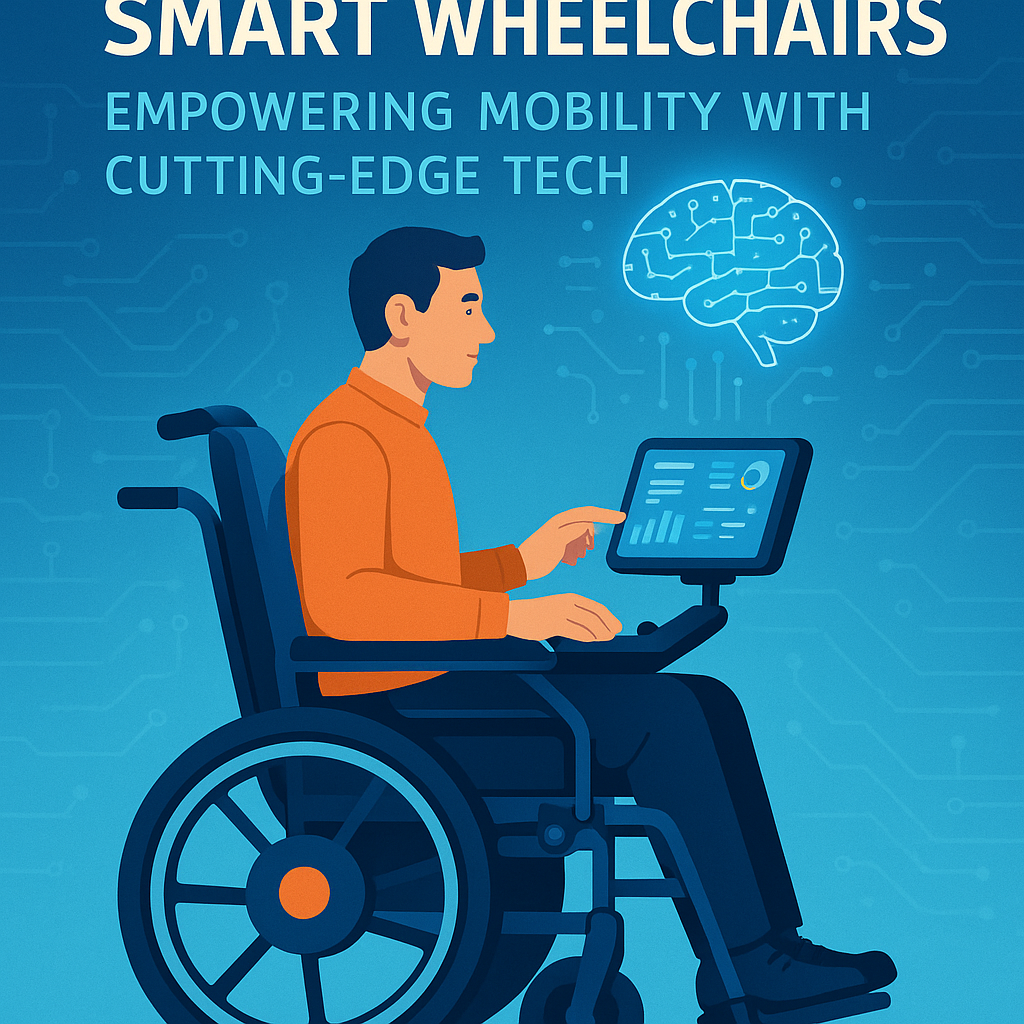
Revolutionizing Mobility Assistance with AI-Powered Smart Wheelchairs
In today’s ever-evolving healthcare landscape, the advancement in technology has paved the way for innovative solutions that aim to enhance the quality of life for individuals requiring mobility assistance. One such groundbreaking development is the introduction of AI-powered smart wheelchairs. These cutting-edge devices harness the power of artificial intelligence, machine learning, and IoT connectivity to revolutionize the concept of mobility assistance. Let’s delve deeper into the core technologies, standout features, real-world applications, and best practices surrounding the integration of smart wheelchairs in healthcare and daily-living environments.
Core Technologies Behind Smart Wheelchairs
AI & Machine Learning: At the heart of smart wheelchairs are sophisticated neural-network algorithms that facilitate real-time path planning, obstacle detection, and dynamic route optimization. This technology ensures seamless navigation in diverse and complex environments, providing users with a smooth and efficient mobility experience.
Sensor Suite: Smart wheelchairs are equipped with a range of sensor technologies including LiDAR, depth cameras, ultrasonic sensors, and IMUs. These sensors work in tandem to map the surroundings, detect obstacles, and track user posture, enhancing both safety and user experience.
Connectivity & Power Management: Bluetooth, Wi-Fi, and emerging 5G modules enable seamless connectivity for remote monitoring, over-the-air updates, and predictive maintenance. Additionally, features like regenerative braking and optimized battery management contribute to extended operational times, ensuring uninterrupted service for users.
Key Features & Functionalities
Autonomous Navigation: Smart wheelchairs offer autonomous navigation capabilities, allowing them to navigate through environments, avoid obstacles, and even dock themselves at charging stations without user intervention.
Voice & Gesture Controls: Users benefit from hands-free mobility through intuitive voice commands or simple head and hand gestures, providing a more natural and convenient user interface.
Adaptive Seating & Health Monitoring: The integration of intelligent pressure-relief cushions helps prevent ulcers, while built-in vital sensors monitor user posture, heart rate, and fall risk, alerting caregivers when necessary.
Remote Diagnostics: Technicians can remotely troubleshoot performance issues through cloud connectivity, reducing downtime and enhancing overall maintenance efficiency.
User Scenarios & Case Studies
- Urban Commuting: Smart wheelchairs empower users to navigate crowded city streets and public transport hubs independently, enhancing their mobility and autonomy.
- Home Automation Integration: Seamless integration with smart home systems enables users to control doors, lights, and elevators effortlessly, creating a truly accessible living environment.
- Clinical & Rehab Settings: In clinical and rehabilitation settings, smart wheelchairs provide valuable data insights on patient movement patterns, aiding therapists in tailoring personalized treatment plans and monitoring progress effectively.
Selection & Deployment Best Practices
- Assess User & Environment Needs
- Vendor Comparison
- Training & Infrastructure
- Compliance & Safety
Challenges & Future Outlook
Technical Hurdles: Reliably implementing SLAM in dynamic and crowded spaces remains a key technical challenge in the ongoing development of smart wheelchairs.
Cost & Reimbursement: The long-term benefits of reduced fall risk and increased independence are gaining recognition, paving the way for potential insurance and reimbursement advancements.
Emerging Trends: Augmented-reality navigation aids, swarm-robotic group mobility, and enhanced integration with telehealth platforms are set to further empower users with smart wheelchair technology.
In conclusion, AI-powered smart wheelchairs represent a significant leap forward in mobility assistance, offering unparalleled features and functionalities that cater to the diverse needs of users. As healthcare importers, distributors, and elderly care buyers, embracing and integrating these innovative solutions can significantly enhance the quality of care provided to individuals requiring mobility assistance, ultimately leading to improved outcomes and enriched lives.
CTA: Explore the possibilities of AI-powered smart wheelchairs for your healthcare facility today! Contact Tenrova Healthcare to learn more about our cutting-edge solutions.Smart Wheelchairs: Redefining Mobility Assistance for Healthcare Environments
In today’s rapidly evolving world, the demand for innovative solutions to enhance mobility assistance for individuals with disabilities and the elderly is on the rise. Traditional manual and power wheelchairs are being revolutionized by the advent of AI-powered smart wheelchairs. These cutting-edge devices integrate advanced technologies such as artificial intelligence, machine learning, and IoT connectivity to create adaptive mobility platforms that cater to the unique needs of users. This article delves into the core technologies, standout features, real-world applications, and best practices for incorporating smart wheelchairs into healthcare and daily-living environments.
Core Technologies Powering Smart Wheelchairs
AI & Machine Learning: Smart wheelchairs make use of neural-network algorithms to enable real-time path planning, obstacle detection, and dynamic route optimization. This advanced technology ensures seamless navigation in complex environments, providing users with a smooth and efficient mobility experience.
Sensor Suite: Equipped with LiDAR, depth cameras, ultrasonic sensors, and IMUs, smart wheelchairs utilize a comprehensive sensor suite to map surroundings, detect hazards, and track user posture. These sensors work in tandem to enhance safety and situational awareness for users.
Connectivity & Power Management: Smart wheelchairs leverage Bluetooth, Wi-Fi, and 5G modules for remote monitoring, over-the-air updates, and predictive maintenance. Additionally, features like regenerative braking and optimized battery management extend the operational lifespan of the chair, ensuring continuous functionality.
Key Features & Functionalities
Autonomous Navigation: Smart wheelchairs can autonomously navigate around obstacles, plan safe routes indoors and outdoors, and even dock themselves at charging stations. This autonomous capability provides users with enhanced independence and convenience in their daily activities.
Voice & Gesture Controls: Users can enjoy hands-free mobility through natural language commands and simple head or hand gestures. This intuitive control interface simplifies the user experience and ensures a seamless interaction with the wheelchair.
Adaptive Seating & Health Monitoring: Smart wheelchairs feature intelligent pressure-relief cushions to prevent ulcers, while integrated vitals sensors track posture, heart rate, and fall risk. Caregivers receive alerts if predefined thresholds are exceeded, facilitating proactive health monitoring.
Remote Diagnostics: Technicians can remotely diagnose performance issues through cloud-based monitoring, reducing downtime and service costs. This proactive approach to maintenance ensures optimal wheelchair performance and user satisfaction.
User Scenarios & Case Studies
Urban Commuting: In busy urban environments, smart wheelchairs enable users to navigate crowded sidewalks and public transit hubs with ease, offering greater autonomy and mobility independence.
Home Automation Integration: Seamless integration with smart home devices allows users to control doors, lights, and elevators, making the home environment more accessible and user-friendly.
Clinical & Rehab Settings: Data-driven insights gathered from smart wheelchairs assist therapists in designing customized rehabilitation plans and monitoring patient progress in real time, enhancing the quality of care provided.
Selection & Deployment Best Practices
Assess User & Environment Needs: Evaluate user mobility levels, cognitive abilities, and typical travel routes to select the appropriate sensor package and control interface that best suit their requirements.
Vendor Comparison: Compare AI accuracy, sensor reliability, support packages, and cybersecurity protocols when selecting a smart wheelchair provider to ensure optimal performance and user safety.
Training & Infrastructure: Provide comprehensive training to caregivers and facility staff on using smart wheelchairs effectively. Additionally, ensure that the necessary infrastructure, including power sources and safe navigation pathways, is in place.
Compliance & Safety: Verify that smart wheelchairs adhere to ISO, FDA, or CE certifications and uphold best practices for data privacy and user consent, ensuring the highest standards of safety and regulatory compliance.
Challenges & Future Outlook
Technical Hurdles: Overcoming challenges related to reliable SLAM in dynamic, crowded spaces remains a key focus area for further technological advancements in smart wheelchair navigation.
Cost & Reimbursement: The long-term benefits of reduced fall risk and increased user independence are gaining recognition from insurance providers and healthcare payers, indicating a positive reimbursement outlook for smart wheelchair adoption.
Emerging Trends: Augmented-reality navigation aids, swarm-robotic group mobility, and enhanced integration with telehealth platforms offer exciting prospects for further empowering users and improving mobility assistance services.
As healthcare importers, distributors, and elderly care buyers, embracing the potential of AI-powered smart wheelchairs can significantly enhance the quality of care and support provided to individuals with mobility challenges. By leveraging these innovative technologies and adhering to best practices in selection, deployment, and maintenance, healthcare professionals can ensure optimal user experiences and improved outcomes in healthcare settings.
Contact Tenrova Healthcare today to learn more about integrating AI-powered smart wheelchairs into your healthcare environment and revolutionize mobility assistance for your patients and residents. Empower independence, enhance safety, and transform mobility with smart wheelchairs designed for the future.As the healthcare industry continues to evolve, the integration of cutting-edge technologies like AI-powered smart wheelchairs is revolutionizing mobility assistance for individuals with limited mobility. Developed with advanced sensor fusion, machine learning algorithms, and IoT connectivity, these smart wheelchairs are transforming the way people navigate their surroundings and interact with their environments. In this article, we will delve into the core technologies, standout features, real-world applications, and best practices associated with AI-powered smart wheelchairs in healthcare and daily-living environments.
Core Technologies Behind Smart Wheelchairs
The backbone of AI-powered smart wheelchairs lies in the sophisticated technologies they integrate:
AI & Machine Learning:
These wheelchairs make use of neural-network algorithms for real-time path planning, obstacle detection, and dynamic route optimization, ensuring seamless navigation even in complex environments.
Sensor Suite:
LiDAR, depth cameras, ultrasonic sensors, and IMUs work together to map surroundings, detect potential hazards, and track the user’s posture for enhanced safety.
Connectivity & Power Management:
Bluetooth, Wi-Fi, and 5G modules enable features like remote monitoring, over-the-air software updates, and predictive maintenance. Additionally, regenerative braking and optimized battery management prolong operational times, ensuring reliable performance.
Key Features & Functionalities
The standout features of AI-powered smart wheelchairs include:
- Autonomous Navigation: These wheelchairs can autonomously avoid obstacles, plan safe routes indoors and outdoors, and even dock themselves for charging.
- Voice & Gesture Controls: Users can operate the wheelchair hands-free through voice commands or simple gestures, enhancing convenience.
- Adaptive Seating & Health Monitoring: Intelligent cushions prevent ulcers, while integrated sensors track vital signs and posture, issuing alerts to caregivers if necessary.
- Remote Diagnostics: Technicians can troubleshoot issues remotely, minimizing downtime and service costs.
User Scenarios & Case Studies
Real-world applications of smart wheelchairs include:
- Urban Commuting: Smart wheelchairs empower users to navigate crowded city environments independently.
- Home Automation Integration: Integration with smart home devices enhances accessibility within homes.
- Clinical & Rehab Settings: Data-driven insights assist therapists in tailoring rehabilitation plans and monitoring patient progress effectively.
Selection & Deployment Best Practices
Some best practices for selecting and deploying smart wheelchairs include:
- Assessing User & Environment Needs
- Conducting Vendor Comparison
- Providing Training & Infrastructure
- Ensuring Compliance & Safety Standards
Challenges & Future Outlook
While there are challenges such as SLAM in dynamic environments, the future of smart wheelchairs looks promising with trends like augmented reality navigation aids and tighter integration with telehealth platforms.
In conclusion, AI-powered smart wheelchairs are transforming the landscape of mobility assistance in healthcare and daily living environments. By understanding the core technologies, features, and best practices associated with these innovative devices, healthcare importers, distributors, and elderly care buyers can make informed decisions to enhance the quality of care they provide.
For high-quality AI-powered smart wheelchairs and cutting-edge healthcare solutions, consider Tenrova Healthcare. Contact us today to explore our range of innovative products and elevate the standard of care for individuals with mobility challenges.AI-Powered Smart Wheelchairs: Revolutionizing Mobility Assistance
In today’s fast-paced world, traditional manual and even power wheelchairs can leave users feeling limited. AI-powered smart wheelchairs combine advanced sensor fusion, machine learning, and IoT connectivity to create truly adaptive mobility platforms. This article explores the core technologies, standout features, real-world applications, and best practices for integrating smart wheelchairs into healthcare and daily-living environments.
Core Technologies Behind Smart Wheelchairs
AI & Machine Learning: Smart wheelchairs leverage neural-network algorithms for real-time path planning, obstacle detection, and dynamic route optimization, ensuring smooth navigation in complex environments.
Sensor Suite: LiDAR, depth cameras, ultrasonic sensors, and inertial measurement units (IMUs) work in concert to map surroundings, detect hazards, and track user posture.
Connectivity & Power Management: Bluetooth, Wi-Fi, and emerging 5G modules enable remote monitoring, over-the-air updates, and predictive maintenance, while regenerative braking and optimized battery management extend operation times.
Key Features & Functionalities
Autonomous Navigation: The chair can autonomously avoid obstacles, plan safe paths indoors and outdoors, and even dock itself to charging stations.
Voice & Gesture Controls: Users gain hands-free mobility through natural language commands or simple head and hand gestures.
Adaptive Seating & Health Monitoring: Intelligent pressure-relief cushions prevent ulcers, while integrated vitals sensors track posture, heart rate, and fall risk—sending alerts to caregivers if thresholds are exceeded.
Remote Diagnostics: Technicians can troubleshoot performance issues over the cloud, reducing downtime and service costs.
User Scenarios & Case Studies
Urban Commuting: In crowded city sidewalks and public transit hubs, smart wheelchairs navigate autonomously, allowing users greater independence.
Home Automation Integration: Seamless control of smart doors, lights, and elevators transforms the home into a truly accessible environment.
Clinical & Rehab Settings: Data-driven insights on patient movement patterns help therapists tailor rehabilitation plans and monitor progress in real-time.
Selection & Deployment Best Practices
Assess User & Environment Needs: Evaluate mobility levels, cognitive ability, and typical travel routes to select the appropriate sensor package and control interface.
Vendor Comparison: Compare AI accuracy, sensor fidelity, support packages, and cybersecurity safeguards.
Training & Infrastructure: Ensure caregivers and facility staff receive hands-on training, and verify power, network, and safe-navigation pathways are in place.
Compliance & Safety: Confirm ISO, FDA, or CE certifications and adopt best practices for data privacy and user consent.
Challenges & Future Outlook
Technical Hurdles: Reliable SLAM (simultaneous localization and mapping) in dynamic, crowded spaces remains an ongoing focus.
Cost & Reimbursement: Insurance and healthcare payers are beginning to recognize the long-term benefits of reduced fall risk and increased independence.
Emerging Trends: Augmented-reality navigation aids, swarm-robotic group mobility, and tighter integration with telehealth platforms promise even greater user empowerment.
Call to Action:
Are you ready to revolutionize the way mobility assistance is provided in your healthcare facility? Contact Tenrova Healthcare today to explore the cutting-edge AI-powered smart wheelchairs and enhance the quality of life for your patients and residents.Artificial Intelligence (AI) has been a game-changer in various industries, and the field of healthcare is no exception. One of the most exciting developments in mobility assistance is the introduction of AI-powered smart wheelchairs. These innovative devices are revolutionizing the way individuals with mobility limitations navigate their surroundings, providing enhanced independence and safety. In this article, we delve into the key technologies, features, applications, and best practices associated with AI-powered smart wheelchairs, highlighting their potential to transform the healthcare landscape.
Core Technologies Behind Smart Wheelchairs
AI & Machine Learning:
Smart wheelchairs harness the power of AI and machine learning algorithms to enable real-time path planning, obstacle detection, and dynamic route optimization. By continuously analyzing data from various sensors, these chairs can navigate complex environments with precision and efficiency.
Sensor Suite:
Equipped with LiDAR, depth cameras, ultrasonic sensors, and IMUs, smart wheelchairs create detailed maps of their surroundings, detect potential hazards, and monitor user posture. This comprehensive sensor suite ensures a high level of situational awareness, enhancing user safety.
Connectivity & Power Management:
Advanced connectivity options such as Bluetooth, Wi-Fi, and 5G modules enable remote monitoring, software updates, and predictive maintenance. Additionally, features like regenerative braking and optimized battery management enhance operational efficiency, prolonging battery life and reducing downtime.
Key Features & Functionalities
Autonomous Navigation:
Smart wheelchairs are designed to autonomously navigate through various environments, avoiding obstacles, planning safe routes, and even docking themselves at charging stations. This feature offers users a new level of independence and convenience.
Voice & Gesture Controls:
Users can interact with smart wheelchairs using voice commands or simple gestures, allowing for hands-free operation. This intuitive control system enhances user experience, especially for individuals with limited mobility.
Adaptive Seating & Health Monitoring:
Intelligent pressure-relief cushions help prevent pressure ulcers, while integrated sensors monitor vital signs and posture, alerting caregivers in case of any anomalies. This proactive health monitoring feature ensures user well-being and safety.
Remote Diagnostics:
Technicians can remotely diagnose and troubleshoot performance issues using cloud-based tools, minimizing downtime and service costs. This feature streamlines maintenance processes and ensures optimal performance.
User Scenarios & Case Studies
Urban Commuting:
Smart wheelchairs enable users to navigate crowded city streets and public transit hubs with ease, offering greater mobility and independence in urban environments.
Home Automation Integration:
Integration with smart home devices allows users to control doors, lights, and elevators seamlessly, creating a more accessible living space.
Clinical & Rehab Settings:
In clinical settings, smart wheelchairs provide valuable data insights on patient movement patterns, aiding therapists in designing personalized rehabilitation plans and monitoring progress effectively.
Selection & Deployment Best Practices
Assess User & Environment Needs:
Before deploying smart wheelchairs, it is essential to evaluate user mobility levels, cognitive abilities, and typical travel routes to choose the most suitable sensor package and control interface.
Vendor Comparison:
When selecting smart wheelchair providers, compare factors like AI accuracy, sensor quality, support services, and cybersecurity measures to ensure optimal performance and reliability.
Training & Infrastructure:
Ensure that caregivers and facility staff receive thorough training on operating and maintaining smart wheelchairs. Additionally, establish proper infrastructure, including power sources and safe navigation pathways.
Compliance & Safety:
Verify that smart wheelchairs meet industry standards such as ISO, FDA, or CE certifications to ensure compliance with regulations. Implement data privacy measures and obtain user consent for data collection and sharing.
Challenges & Future Outlook
Technical Hurdles:
Ongoing research is focused on improving SLAM capabilities in dynamic and crowded environments to enhance the overall performance and reliability of smart wheelchairs.
Cost & Reimbursement:
As the benefits of smart wheelchairs become more evident, insurance providers and healthcare payers are recognizing the long-term value of these devices, potentially leading to increased reimbursement options.
Emerging Trends:
Future developments in smart wheelchair technology may include augmented reality navigation aids, swarm-robotic group mobility solutions, and deeper integration with telehealth platforms, offering enhanced functionalities and user empowerment.
In conclusion, AI-powered smart wheelchairs represent a significant advancement in the field of mobility assistance, offering users a new level of independence, safety, and convenience. By leveraging cutting-edge technologies and innovative features, these devices are transforming the way individuals with mobility limitations interact with their environments. As healthcare importers, distributors, and elderly care buyers, exploring the potential of smart wheelchairs can open up new opportunities for enhancing patient care and quality of life.
For more information on integrating AI-powered smart wheelchairs into your healthcare environment, contact Tenrova Healthcare today for personalized solutions tailored to your needs.
Incorporating AI-powered smart wheelchairs into healthcare settings can significantly enhance patient care and quality of life. Contact Tenrova Healthcare today to explore innovative mobility solutions for your facility.AI-Powered Smart Wheelchairs: Revolutionizing Mobility Assistance
In today’s fast-paced world, traditional manual and even power wheelchairs can leave users feeling limited. AI-powered smart wheelchairs combine advanced sensor fusion, machine learning, and IoT connectivity to create truly adaptive mobility platforms. This article explores the core technologies, standout features, real-world applications, and best practices for integrating smart wheelchairs into healthcare and daily-living environments.
Core Technologies Behind Smart Wheelchairs
AI & Machine Learning
Smart wheelchairs leverage neural-network algorithms for real-time path planning, obstacle detection, and dynamic route optimization, ensuring smooth navigation in complex environments.
Sensor Suite
LiDAR, depth cameras, ultrasonic sensors, and inertial measurement units (IMUs) work in concert to map surroundings, detect hazards, and track user posture.
Connectivity & Power Management
Bluetooth, Wi-Fi, and emerging 5G modules enable remote monitoring, over-the-air updates, and predictive maintenance. Regenerative braking and optimized battery management extend operation times.
Key Features & Functionalities
- Autonomous Navigation: The chair can autonomously avoid obstacles, plan safe paths indoors and outdoors, and even dock itself to charging stations.
- Voice & Gesture Controls: Users gain hands-free mobility through natural language commands or simple head and hand gestures.
- Adaptive Seating & Health Monitoring: Intelligent pressure-relief cushions prevent ulcers, while integrated vitals sensors track posture, heart rate, and fall risk—sending alerts to caregivers if thresholds are exceeded.
- Remote Diagnostics: Technicians can troubleshoot performance issues over the cloud, reducing downtime and service costs.
User Scenarios & Case Studies
- Urban Commuting: In crowded city sidewalks and public transit hubs, smart wheelchairs navigate autonomously, allowing users greater independence.
- Home Automation Integration: Seamless control of smart doors, lights, and elevators transforms the home into a truly accessible environment.
- Clinical & Rehab Settings: Data-driven insights on patient movement patterns help therapists tailor rehabilitation plans and monitor progress in real time.
Selection & Deployment Best Practices
- Assess User & Environment Needs: Evaluate mobility levels, cognitive ability, and typical travel routes to select the appropriate sensor package and control interface.
- Vendor Comparison: Compare AI accuracy, sensor fidelity, support packages, and cybersecurity safeguards.
- Training & Infrastructure: Ensure caregivers and facility staff receive hands-on training, and verify power, network, and safe-navigation pathways are in place.
- Compliance & Safety: Confirm ISO, FDA, or CE certifications and adopt best practices for data privacy and user consent.
Challenges & Future Outlook
- Technical Hurdles: Reliable SLAM (simultaneous localization and mapping) in dynamic, crowded spaces remains an ongoing focus.
- Cost & Reimbursement: Insurance and healthcare payers are beginning to recognize the long-term benefits of reduced fall risk and increased independence.
- Emerging Trends: Augmented-reality navigation aids, swarm-robotic group mobility, and tighter integration with telehealth platforms promise even greater user empowerment.
Smart wheelchairs are ushering in a new era of mobility assistance, offering not just physical support but also autonomy and dignity to individuals with limited mobility. As healthcare importers, distributors, and elderly care buyers, embracing these AI-powered solutions can enhance the quality of care provided to users while improving operational efficiencies for healthcare facilities.
For more information on how Tenrova Healthcare can help you access cutting-edge smart wheelchair technology for your healthcare needs, contact us today. Let us revolutionize mobility assistance together.