
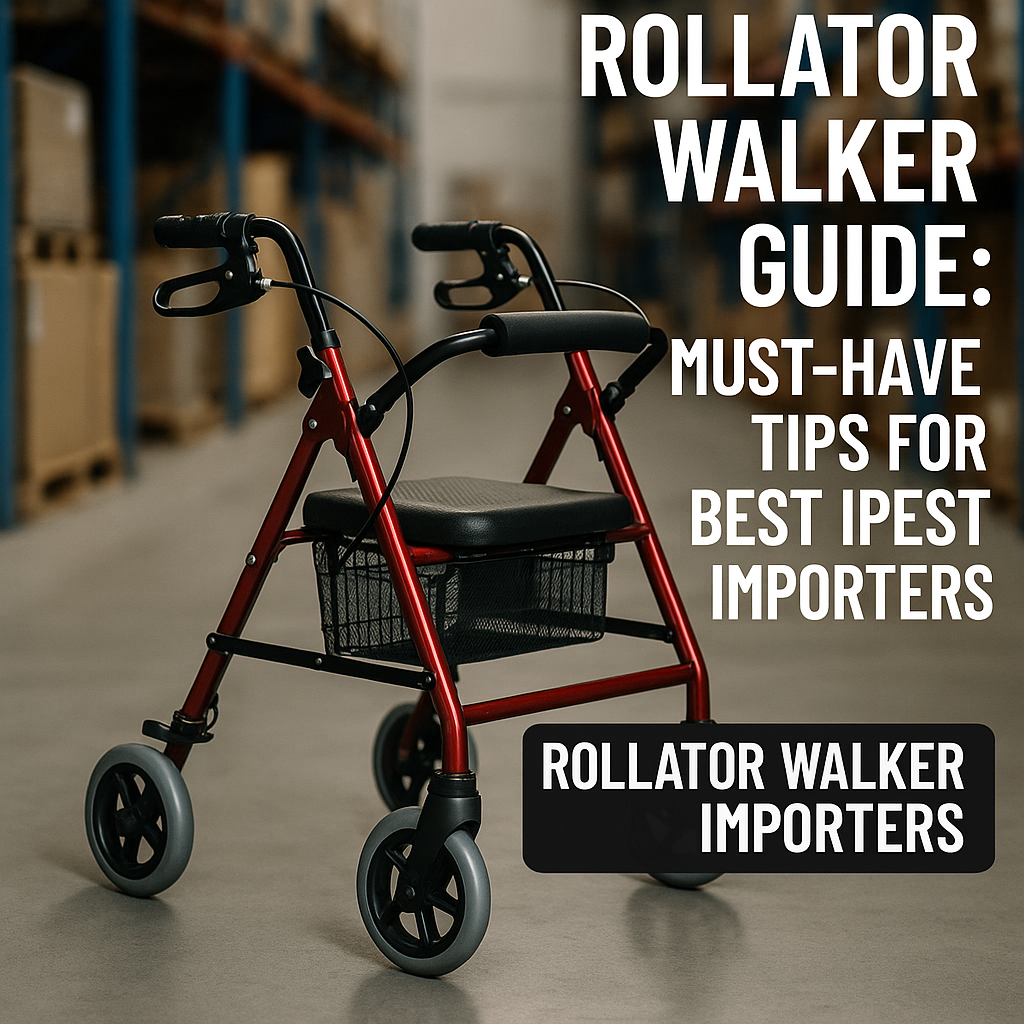
How to Choose the Right Rollator Walker: A Buyer’s Guide for Importers and Distributors
Choosing the right rollator walker is essential for healthcare importers, distributors, and elderly care buyers who aim to provide their customers with reliable mobility solutions. Rollator walkers enhance independence by combining support, seating, and storage in one device, making them indispensable in senior care, rehabilitation, and homecare environments. This comprehensive buyer’s guide highlights crucial factors to consider when sourcing high-quality rollator walkers, helping you make informed decisions that align with end-user needs and market demands.
Assess End-User Requirements for Rollator Walkers
Understanding the target user’s mobility level, weight capacity, and intended environment is the starting point in selecting the most suitable rollator walker.
Mobility Level
- Four-wheel rollators offer maximum stability, ideal for users requiring considerable support. Their wide bases and integrated brakes provide added safety.
- Three-wheel rollators are perfect for semi-independent users who need greater agility and tighter turning radii, especially in confined spaces.
Weight Capacity
Rollators typically support weights up to 100 kg, but heavy-duty models can hold between 130 and 150 kg. Matching the walker’s capacity with the user’s weight ensures durability and safety.
Intended Environment
- Indoor use: Smaller wheels (8–12 cm) and maneuverable frames facilitate smooth navigation on flat surfaces and through doorways.
- Outdoor use: Larger wheels (20–25 cm) with rugged tires handle uneven terrain, sidewalks, and thresholds effectively.
Exploring Different Types of Rollator Walkers
The diversity in rollator design caters to varying user preferences and environments.
Upright Walkers Without Wheels
While these promote proper posture and muscle engagement, they require users to lift and move the walker actively, which may not be suitable for all.
Two-Wheel Walkers
Featuring front wheels and rear sliding uprights, two-wheel models strike a balance between mobility assistance and lightweight design.
Four-Wheel Rollators
These provide the highest stability, often equipped with adjustable seats and storage baskets, making them ideal for users requiring extended support and rest options.
Three-Wheel Rollators
Compact and lightweight, three-wheel rollators excel in tight spaces like crowded indoor areas, making them an excellent choice for active users.
Frame Materials and Durability: What Importers Should Know
Selecting the appropriate frame material impacts the walker’s overall weight, strength, and longevity.
- Aluminium Alloy: Lightweight (2.2–4.5 kg), corrosion-resistant, and easy to handle, aluminium frames are popular for their balance of strength and portability.
- Steel: Heavier but more robust, steel frames support heavier users (up to 150 kg) and offer long-term durability.
- Surface Finish: Anodized or powder-coated finishes prevent rust and scratches, extending product lifespan and maintaining aesthetics.
Important Features: Handles, Brakes, Wheels, and Adjustability
Handle and Brake Systems
- Ergonomic Grips: Non-slip foam or TPR grips reduce hand fatigue during prolonged use.
- Brake Types: Most rollators use loop-style brakes for easy engagement. Drum brakes offer secure wheel locking, particularly beneficial when sitting on the rollator seat.
- Adjustable Handles: Height adjustments ranging from 75 to 95 cm ensure proper posture and comfort.
Wheel Size and Maneuverability
- Small wheels (8–12 cm): Best for smooth indoor environments, offering tight turning capabilities.
- Large wheels (20–25 cm): Suitable for outdoor use, handling rough terrain and obstacles effectively.
- Wheel Material: PU and PVC tires resist punctures and demand minimal maintenance.
Seat and Storage Options
- Built-in Seats: Materials like PU and Textilene support users up to 100 kg, providing convenient rest spots.
- Backrests: Detachable or fold-down options enhance seating comfort.
- Storage Baskets/Bags: Wire baskets and detachable Oxford-fabric bags carry essentials, boosting user convenience.
Foldability, Portability, and Space Efficiency
For importers and distributors, rollators that fold easily improve shipping efficiency and user convenience.
- Quick-fold mechanisms: One-hand, one-click systems enable effortless folding.
- Folded dimensions: Aim for compact sizes under 80×50×25 cm to simplify home storage and transport.
- Carry Handles: Integrated handles make it easier to lift rollators into vehicles or public transport.
Ensuring Safety: Certifications and Quality Control
Investing in rollators compliant with international standards guarantees reliability and user confidence.
- Certifications: Look for CE, FDA, ISO13485 approvals to confirm adherence to medical-device quality management.
- Performance Standards: EN 1888 and ASTM F2270 verify load, fatigue, and braking capabilities.
- Third-Party Testing: SGS and TÜV reports provide independent verification of safety and material integrity.
OEM/ODM Customization Options for Competitive Advantage
Tailoring products enhances brand identity and customer appeal.
- Branding and Packaging: Custom logos, colorful frames, and retail-ready packaging with multilingual manuals cater to diverse markets.
- Accessory Bundles: Add-ons like cup holders, cane holders, or detachable trays provide premium features.
- Color Choices: Beyond standard silver or gray, bespoke powder-coat colors can differentiate your product line.
Conclusion: Source Smart, Sell Confident
By carefully evaluating user needs, rollator walker types, materials, safety certifications, and customization opportunities, importers and distributors can build a robust product portfolio that meets market demands. Partnering with manufacturers that prioritize quality control and flexible OEM/ODM options, such as Tenrova Healthcare, positions your business to succeed in the competitive mobility aid sector.
Ready to expand your mobility-aid portfolio with premium rollator walkers? Contact Tenrova Healthcare today for samples, factory audits, and competitive quotes.
- Email: hysun0516@gmail.com
- WhatsApp/Phone: +86-138-1239-0890
- Visit: https://tenrova.com
Enhance your offerings with reliable, ergonomic, and customizable rollator walkers designed to improve users’ quality of life.